
The cutting board at the end of dinner prep usually holds an assortment of tough stem ends, peeled broccoli trunks, and chard ribs that look too fibrous for a fast saute. While composting is a dependable exit strategy, lactic acid fermentation softens those dense cell walls and converts raw scrap material into crisp, sour snacks that never need to touch the compost bin at all. It is practical thrift that also happens to taste good with a sharp cheddar or tucked into a sandwich.
A quick ferment differs from a hot vinegar pickle because it relies on ambient lactic acid bacteria present on vegetable skins rather than an acidic bath poured from a bottle. With a small digital scale, a clean glass jar, plain tap water that has been cleared of chlorine, and standard non-iodized salt, you can turn fibrous vegetable trimmings into tart, crunchy pickles within four to seven days on the counter.
Collecting and Prepping Clean Vegetable Ends
Not every scrap from the prep board belongs in a fermentation jar. The goal is to work with trimmings that retain crisp structure under bacterial action rather than melting into gray sludge. Heavy stems from kale, chard, collards, and broccoli work particularly well, as do cabbage hearts, kohlrabi skins trimmed thick, radish tops, and the lower ends of asparagus spears. Leafy trimmings without stems break down too quickly and should head straight to the soil pile instead.
Because soil clings to stem junctions, wash these scraps with extra attention. Dirt carries soil-dwelling bacteria and molds that can compete with the lactic acid bacteria you want to encourage. Soak ribbed stems in cool water, scrub the bases with a stiff vegetable brush, and rinse away every grain of sand. If you are using broccoli or cauliflower stalks, slice away the tough, woody outer skin with a paring knife until you reach the paler, tender interior cylinder.
Uniformity in shape determines how evenly the brine penetrates the vegetables. Stems sliced into unequal sizes will ferment at different rates, leaving the small pieces soft and salty while the larger batons remain raw and stiff in the center. Aim for pieces that share roughly the same thickness, keeping them small enough to pack tightly beneath the jar shoulder.
- Brassica stems (broccoli, cauliflower): Peel the fibrous green skin, then slice the core crosswise into coins roughly 0.5 centimeters thick, or lengthwise into matchsticks.
- Chard and kale ribs: Strip the leaves away completely. Cut the ribs into sticks that stand 2 centimeters below the neck of your jar.
- Cabbage cores: Slice the dense central core into thin wedges no thicker than 0.75 centimeters to let the salt penetrate quickly.
- Root shoulders and ends: Trim the hairy tips from carrots, parsnips, and radishes, then cut the dense ends into thin half-moons.
Calculating Salt Brine Weight by Volume
Lactic acid fermentation requires a specific concentration of salt to suppress putrefactive bacteria while allowing salt-tolerant Leuconostoc and Lactobacillus species to flourish. Guessing with tablespoons invites trouble because coarse kosher salt, fine table salt, and sea salt flakes vary dramatically in density. Using a digital gram scale eliminates the risk of soft, spoiled produce or unpalatably salty vegetables.
There are two reliable ways to calculate salt: based on the water alone, or based on the total weight of the water plus the vegetables. For tough trimmings, calculating brine by water weight works smoothly as long as you pack the jar tightly. A 2.5 percent to 3.5 percent brine provides a solid safety margin for fibrous scraps, which contain less natural water than soft vegetables like cucumbers. A 3 percent brine offers a crisp bite and reliable protection against unwanted fungal growth.
To mix a 3 percent brine, weigh your water in grams and multiply by 0.03. Dissolve that amount of fine salt into the liquid before pouring it over your packed trimmings. Avoid salts that list anti-caking agents like yellow prussiate of soda or calcium silicate on the package, as these additives can turn the brine murky and produce a bitter metallic aftertaste. Plain sea salt or standard canning and pickling salt works best.
| Target Brine Strength | Water Volume | Salt Weight Needed | Best Use Case |
|---|---|---|---|
| 2.5 percent | 500 milliliters (grams) | 12.5 grams | Tender chard ribs, young carrot tops, radish shoulders |
| 3.0 percent | 500 milliliters (grams) | 15 grams | Peeled broccoli trunks, cauliflower cores, kohlrabi slices |
| 3.5 percent | 500 milliliters (grams) | 17.5 grams | Dense cabbage hearts, mature kale stems, woody turnip ends |
If your municipal tap water carries a strong chlorine or chloramine odor, let it sit uncovered in an open pitcher for 24 hours so the chlorine dissipates, or boil it for 12 minutes and cool it to room temperature before adding the salt. Lactic acid bacteria are sensitive to water disinfectants, which can stall fermentation before it starts.
Choosing Spices That Complement Bitter Greens
Fibrous stems from the brassica and beet families often bring pungent sulfur compounds or earthy bitterness to the jar. A deliberate spice blend cuts through these heavy notes and balances the lactic acid that develops during the week. Unlike vinegar pickles that absorb sweet spices well, wild ferments benefit from savory, pungent, and citrusy seeds that anchor the sour brine.
Mustard seeds are particularly useful when fermenting tough stems. They release natural enzymes and pungent oils that stabilize the vegetable texture and soften sulfurous undertones. Yellow mustard seeds give a mild warmth, while brown mustard seeds provide an earthy bite that pairs well with heavy collard and kale stems. Whole black peppercorns, coriander seed, and caraway work together to cut the grassy flavor common in raw ribs.
Fresh aromatics like garlic cloves and ginger roots should be sliced rather than minced to prevent them from floating to the surface. A single crushed garlic clove per half-liter jar is enough to provide aroma without overwhelming the natural sweetness of the stems. If you enjoy heat, add a dry bird's eye chili or a pinch of red pepper flakes, keeping in mind that spicy compounds migrate quickly through a room-temperature brine.
- Peeled broccoli and cauliflower cores: Combine one clove of sliced garlic, half a teaspoon of yellow mustard seed, a pinch of red pepper flakes, and two fresh dill sprigs.
- Chard and beet stems: Pair one teaspoon of crushed coriander seed, half a teaspoon of black peppercorns, and a small strip of fresh lemon peel with the white pith removed.
- Kale and collard ribs: Use half a teaspoon of caraway seed, one cracked allspice berry, and one small bay leaf to counter earthy, tannin-heavy green notes.
- Mixed root and brassica scraps: Combine half a teaspoon of cumin seed, two slices of fresh ginger, and half a teaspoon of whole brown mustard seeds.
Managing Submersion and Gas Buildup
Fermentation is an anaerobic process. The beneficial bacteria thrive in oxygen-free environments, while the molds and yeasts that cause spoilage require air. Every single piece of vegetable trimming must remain pinned completely beneath the brine surface. Stray stem tips sticking up into the headspace act as ladders for surface mold, which can ruin an entire jar in two days.
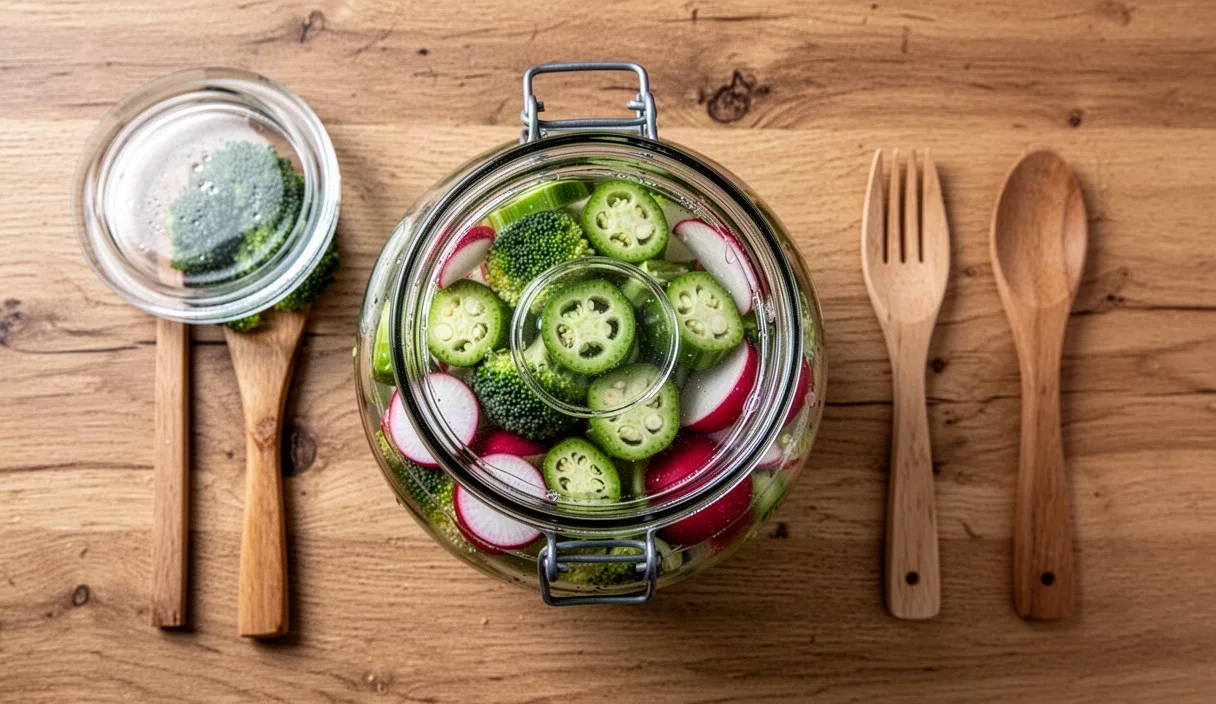
Pack the trimmed vegetables into the jar, leaving roughly 3 centimeters of empty space below the rim. Place a clean, lead-free glass fermentation weight directly on top of the vegetables to push them downward. If you do not own glass weights, save an outer cabbage leaf, wash it thoroughly, cut it to the width of the jar, and tuck it over the scraps like a blanket before screwing down the lid. The leaf holds small floaters down beneath the brine; if the top leaf discolors later, you can discard it while keeping the pickles beneath it clean.
As the bacteria consume vegetable starches, they release carbon dioxide gas. In an airtight jar, this gas builds pressure quickly. You must release this pressure daily by unscrewing the ring or lid just until you hear a slight hiss, then tightening it again immediately. Doing this once in the morning and once at night prevents lid warping and avoids accidental brine geysers across the kitchen counter.
Alternatively, replace standard flat canning lids with silicone fermentation valves or water-filled three-piece airlocks. These devices allow expanding carbon dioxide to vent outward while blocking ambient air, dust, and fruit flies from entering. If a light, powdery white film forms across the liquid surface, it is almost certainly Kahm yeast, a harmless wild yeast that forms when oxygen touches the surface. Skim it off with a clean metal spoon so it does not affect the aroma.
Transferring Jars to Cold Storage
Because vegetable ends are dense, they ferment at a steady, moderate pace. Between day three and day five at an average room temperature of 19 to 22 degrees Celsius, open the jar and retrieve a stem with a clean fork. The piece should taste noticeably sour, mildly salty, and retain a distinct crunch. If it still tastes like raw vegetable and plain saltwater, close the jar and let it sit for two more days.
Once the acidity reaches a level you enjoy, halt the room-temperature fermentation by moving the jar into a refrigerator held at 2 to 4 degrees Celsius. Cold temperatures do not kill the lactic acid bacteria, but they slow their metabolism down to a crawl, preserving the texture and flavor for weeks. If left on the counter indefinitely, the bacteria would continue producing acid until the stems softened into sour mush.
Before chilling, ensure the vegetables are still covered with brine. If you lost liquid during tasting or gas venting, top the jar off with a splash of fresh 3 percent salt brine rather than plain water to keep the preservative ratio stable. Wipe the jar threads clean with a damp towel to remove dried salt crust, replace the lid with a rust-proof plastic storage cap, and label the jar with the vegetable mix and the date.
Pickled trimmings kept cold remain crisp for three to four months. Eat them directly as a garnish for rich meats, chop them fine like relish for grain salads, or slide them into grilled cheese sandwiches where their acidity cuts straight through melted fat.
Common Mistakes to Avoid
Small errors in technique can spoil an otherwise clean batch of stem pickles. Watch for these regular missteps during prep and fermentation:
- Using unboiled municipal water: Chlorinated water suppresses wild bacterial activity, leading to stalled fermentation and off flavors.
- Leaving stems thick and fibrous: Failing to peel tough broccoli stalks results in pickles with a leathery skin that remains unchewable even after a week in acid.
- Eyeballing salt measurements: Salt varieties vary widely in crystal size. Measuring by volume instead of weight often causes over-salting or mold growth from under-salting.
- Letting scraps float: Loose bits of dill or stem slivers sitting above the brine line invite fuzzy gray mold spores that render the batch unsafe.
- Fermenting in direct sunlight: Ultraviolet light degrades plant pigments, breaks down aromatic oils, and causes erratic temperature spikes inside the glass.
Practical Next Steps
To start without altering your grocery routine, set a clean, lidded glass container in the refrigerator tonight. Over the next three days, drop your washed, trimmed brassica cores and chard stems into the jar as you prepare standard meals. Once you have collected roughly 300 to 400 grams of scrap material, pull out your digital scale, mix a half-liter of 3 percent brine, pack the vegetables into a clean jar, and set them on a dark kitchen shelf.
Fermentation is an ancient and forgiving preservation method, but it is not infallible. Inspect your jars before tasting. A healthy ferment smells sour, sharp, and clean, like sauerkraut or dill pickles, and the liquid may appear slightly cloudy. If you ever encounter fuzzy green, black, or pink mold, an uncharacteristic slimy texture in the brine, or a putrid smell resembling rotten waste, discard the contents and clean the equipment thoroughly. When in doubt regarding home food preservation safety guidelines, consult your regional university agricultural extension service for tested parameters on vegetable pickling.