
Most household waste audits tell you to dump your entire garbage bin onto a tarp in the living room. Unless you live alone and possess heroic patience, spreading discarded dental floss and soggy cotton pads across the rug is a fast way to abandon low-waste living forever. A targeted bathroom audit is much simpler, far cleaner, and gives you clear baseline numbers within seven days.
The bathroom generates a disproportionate amount of rigid plastic packaging relative to its square footage. Shampoo jugs, pump dispensers, pump springs made of mixed metals, and blister packs hide inside vanity drawers until trash day. By monitoring only what leaves the room during a regular week, you isolate daily routines from occasional deep-cleaning debris and can make changes that stick.
Collecting Empties Over One Full Week
Choose an ordinary seven-day stretch without houseguests or travel. Place an open box, a paper bag, or a spare bucket next to the bathroom bin. Label it clearly so other members of the household understand its purpose. For one week, every finished item goes into this collection bin rather than the rubbish chute or municipal recycling pail.
Keep the criteria strict to ensure accurate data. You are collecting items that were completely consumed, worn out, or discarded during these seven days. If a bar of soap dwindles to a sliver that breaks in half, toss both fragments into the box. If you finish an eye cream, rinse the tube lightly and drop it in alongside the cap.
Include the following routine castoffs in your temporary bin:
- Empty personal care bottles: body wash, shampoo, conditioner, and micellar water.
- Tube packaging: toothpaste, face lotion, ointments, and masks.
- Dental tools: worn toothbrush heads, empty floss spools, and cardboard boxes.
- Grooming discards: disposable razor cartridges, shaving cream cans, and wax strips.
- Applicators and cotton items: round pads, swabs, sheet mask wrappers, and wipes.
Do not rinse items obsessively, but tap out excessive moisture so the collection box does not soften into pulp by Thursday. Leave daily toilet tissue in the regular waste stream; we want to measure packaging, tools, and recurring consumables rather than sanitary paper.
Sorting Items by Material and Function
At the end of day seven, set your box on a clear counter with a notepad. Separate the pile into categories based on material composition and whether your local authority accepts them in standard curbside bins. In many regions, items smaller than two inches across fall through sorting facility screens, meaning small travel bottles and plastic caps head directly to landfill even if stamped with a recycling resin code.
Sort the pile into four distinct material categories:
- Monolithic rigid plastics: Bottles marked HDPE (number 2) or PP (number 5) without pumps or rubber sleeves attached.
- Mixed-material items: Lotion pumps with internal steel springs, laminated toothpaste tubes, and blister packs with foil backings.
- Non-recyclable synthetics: Polyester sheet masks, nylon dental floss, and plastic-stemmed cotton swabs.
- Infrequent consumables: Shaving cartridges containing bonded rubber grips and multiple blades.
The table below illustrates a standard inventory taken from a two-person bathroom over one week, showing why simple bottle counts disguise the true volume of complex waste.
| Item Category | Weekly Count | Primary Material | Curbside Recyclable |
|---|---|---|---|
| Body wash and shampoo | 2 bottles | HDPE (jug) / PP (flip cap) | Body only; cap varies |
| Lotion with pump dispenser | 1 bottle | PET bottle / steel spring inside PP pump | No; pump contaminates bin |
| Toothpaste tube | 1 tube | Multi-layer plastic laminate | Rarely; requires specialty drop-off |
| Nylon dental floss | 1 spool + case | Polypropylene case / nylon filament | No |
| Cotton rounds | 14 pads | Bleached cotton / synthetic blend | No; municipal compost rejects synthetics |
| Disposable razor cartridge | 1 head | ABS plastic / stainless steel / lubricated strip | No |
Seeing your discards laid out this way reveals where the real volume sits. Two large shampoo bottles look impressive in a recycling bin, but the unrecyclable pump mechanisms, tubes, and disposable blades are the persistent problems that require alternative habits.
Replacing Liquid Bottles with Reliable Solids
Once you see how many plastic jugs your household empties, swapping liquids for dry bars becomes the most logical adjustment. A single sixty-gram shampoo bar replaces roughly two standard 250-milliliter plastic bottles. The primary hurdle is not cleansing performance; it is bathroom physics. If you leave a concentrated solid bar in a direct shower stream, it turns into an expensive puddle within three days.
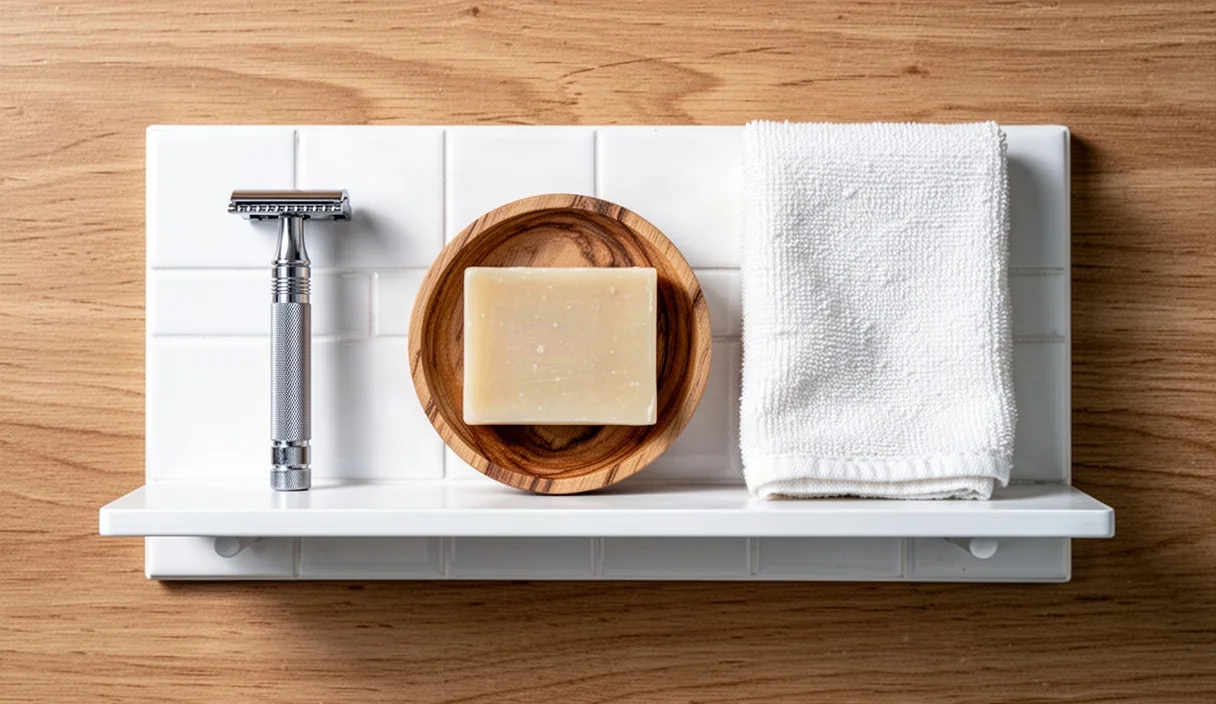
To make solid bars work over the long term, focus on drainage hardware before buying specialty formulas. Select soap rests with deep vertical ridges or slotted cedar slats that lift the bar clear of standing water. If your shower stall lacks dry shelf space, magnetic soap holders that affix to tile walls keep bars suspended in open air, doubling their lifespan.
When selecting solid alternatives, evaluate formulations based on ingredients rather than marketing claims:
- Syndet shampoo bars: Look for sodium cocoyl isethionate (SCI) as the first ingredient. These are synthetic detergent bars formulated at an acidic pH between 4.5 and 5.5, which matches the natural acidity of human hair and prevents the waxy buildup caused by traditional saponified lye soaps.
- Conditioner bars: Choose bars built on behentrimonium methosulfate and cetyl alcohol. These provide slip and detangling without requiring liquid emulsifiers or preservatives.
- Body wash blocks: Traditional cold-process soap works well for body skin, provided it is cured for at least six weeks to maintain hardness.
- Solid facial cleansers: Seek out mild, fragrance-free bars based on oat flour or gentle glucoside surfactants, especially if you have sensitive skin. Consult a dermatologist before swapping cleansers if you treat acne, rosacea, or eczema.
Switching one product at a time gives your skin and hair time to adjust. Swap your body wash first, run through the bar completely, then tackle shampoo and conditioner in separate months.
Evaluating Safety Razors and Metal Hardware
Cartridge razors are engineered around planned obsolescence. The plastic housing, rubber moisture strip, and micro-thin steel blades are fused together, rendering the head completely impossible to separate and recycle. A standard double-edge safety razor, made of solid brass, zinc alloy, or stainless steel, circumvents this entirely by using bare steel blades that cost around twelve cents each.
Transitioning to a metal safety razor requires adjusting your muscle memory. Cartridge razors use pivoting heads that encourage you to press down hard against the skin. A safety razor has no moving head and sufficient physical heft, meaning the weight of the metal provides all necessary cutting pressure. Pressing down as you would with a disposable cartridge almost guarantees a nick.
Adopt these mechanical rules when learning to shave with metal hardware:
- Hold the handle at a thirty-degree angle relative to your skin.
- Use short, controlled strokes measuring two to three inches, rinsing the head between passes.
- Never press the razor against your face or legs; let gravity carry the cutting edge.
- Store used blades in an enclosed metal tin or a dedicated blade bank rather than throwing them loose into the trash.
When your blade bank fills up after two or three years, seal the container and check with your municipal scrap metal depot. Many scrap yards accept sealed steel tins, melting them down alongside standard steel scrap. If you take blood-thinning medication or manage a motor control condition, discuss hair removal alternatives with a healthcare provider before handling bare razor blades.
Building a Refill Routine You Can Maintain
Refilling bulk liquids sounds appealing, but without a clear routine, it quickly becomes an unwashed cluster of mason jars under the sink. The secret to a durable refill habit is matching the container to your real-world handling tendencies. Glass jars look neat on social media, yet wet hands, tile floors, and heavy glass make an unsafe combination in early morning showers.
Instead of decorative glass, repurpose sturdy aluminum bottles or keep your existing heavy-duty plastic pump bottles and refill them repeatedly. Aluminum bottles with pump tops are lightweight, do not shatter when dropped against cast-iron bathtubs, and accept permanent marker labels that do not wash off under warm water.
Keep your refill logistics simple by following these operational steps:
- Establish a quarterly restock date: Do not run to a bulk shop for three ounces of hand wash. Visit the shop four times per year with high-capacity jugs to restock baseline staples.
- Clean containers thoroughly between fills: Wash pump dispensers with hot water and mild detergent, flush the dip tube three times, and allow the assembly to dry completely for twenty-four hours. Filling damp bottles can breed bacteria or mold inside water-based formulations that lack strong industrial preservatives.
- Standardize pump outputs: If your household goes through liquid soap too quickly, replace high-output pumps (which dispense up to three milliliters per stroke) with foaming pumps. Foaming dispensers blend one part liquid soap with three to four parts water, reducing formula usage by more than sixty percent per wash.
- Keep a backup reservoir: Maintain one sixty-four-ounce jug of liquid castile or plant-based hand soap in the utility closet. When an individual sink bottle runs out, refill it immediately from your bulk jug rather than waiting for an afternoon trip to the zero-waste co-op.
Common Mistakes to Avoid
The most frequent error during a bathroom waste audit is throwing away half-full bottles to start fresh with aesthetic replacements. Discarding thirty ounces of usable conditioner because it comes in virgin plastic defeats the primary purpose of resource conservation. Use every drop of your existing inventory first; your low-waste transition starts when the bottle is empty, not when you buy a new bamboo shelf.
Another pitfall is buying multi-purpose products that do not suit your hair or skin type. Castile soap, for example, is an exceptional surface cleaner and decent hand soap, but its alkaline pH of roughly 8.9 makes it poorly suited for human scalp hair or delicate facial skin. Using it as an all-in-one wash often leads to tangled hair, dry skin, and an eventual retreat back to single-use plastic bottles out of frustration.
Finally, avoid hoarding empty containers without a plan. If your community lacks a specialty recycling program like TerraCycle for laminated tubes and cosmetic packaging, keeping thirty empty lipstick cases in a shoebox does not prevent waste. It merely delays disposal while taking up cupboard space.
Practical Next Steps
Do not attempt to overhaul your entire personal care routine before breakfast tomorrow. Pick a start day for your seven-day collection box, preferably a Monday morning. Keep your sorting notepad inside a medicine cabinet so you can tally empty items the moment they run out.
Once you finish the audit and categorize your weekly discards, select exactly one high-frequency item to swap during the coming month. If your tally shows three plastic hand-soap pumps, convert those stations to bar soap or install a refillable foaming dispenser. Address hair care, shaving equipment, and oral care in subsequent months. A steady, unhurried progression keeps your bathroom functional, minimizes clutter, and builds habits that hold up year after year.